
Description
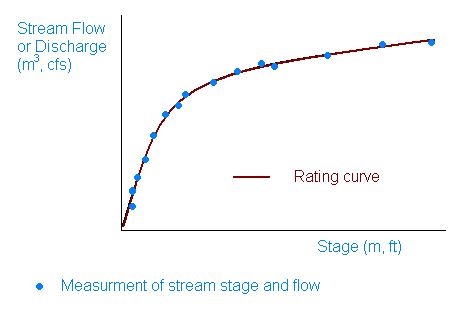
A River Rating Curve (also known as a Stage-Discharge Curve) is a fundamental tool used in hydrology and water resource management. It represents the relationship between the stage (water level) and the discharge (flow rate) in a river or stream. This rating curve hydrology approach is essential for understanding how much water flows through a river at a given height and is used to estimate flow rates at locations where direct measurements might not be possible.
Key Components:
Stage (Water Level): This refers to the height of the water surface above a reference point (often referred to as the riverbed). It is typically measured in meters or feet. The stage is influenced by factors such as rainfall, snowmelt, or upstream flow.
Discharge (Flow Rate): The amount of water passing through a cross-section of the river per unit of time, typically measured in cubic meters per second (m³/s) or cubic feet per second (cfs). Discharge is influenced by the stage, but also by the river’s width, depth, and velocity.
Purpose and Use:
-
Hydrological Modeling: A rating curve is used to predict river discharge based on stage readings. This is crucial for managing water resources, flood forecasting, and designing infrastructure like dams and bridges.
-
Flood Monitoring: By understanding the discharge at different stages, authorities can predict potential flooding risks and issue warnings.
-
Water Quality & Ecology: Discharge rates influence water quality, habitat conditions, and the movement of sediment, which are important for ecosystem management.
How It Works:
The rating curve hydrology method is developed by collecting data over time, where both stage and discharge are measured at a particular location on the river. As water levels rise, the discharge also increases, but the relationship is often nonlinear, meaning that small increases in stage can result in large increases in discharge.
Once the curve is developed through field measurements, it serves as a predictive tool, allowing river managers and engineers to estimate the discharge for a given water level.
Factors Affecting the Rating Curve:
-
River Shape and Size: The channel geometry, such as width, depth, and slope, affects the curve’s steepness. Wider or deeper channels can carry more water at lower stages.
-
Sediment and Obstructions: Sediment build-up, vegetation, or artificial structures like dams can alter the flow, shifting the rating curve over time.
-
Weather Events: Extreme rainfall or drought can change the relationship between stage and discharge, requiring updates to the curve.
Benefits:
-
Accuracy in Flow Predictions: A rating curve provides a reliable method for estimating discharge even when direct flow measurements are not available.
-
Flood Management: Helps in anticipating potential flood events based on river stage and in planning for flood control measures.
-
Water Resource Planning: Assists in managing the allocation of water for irrigation, drinking, or industrial use.

Reviews
There are no reviews yet.